Year after year, the percentage of adults living with obesity continues to increase. According to the National Office of Statistics and the NHS, one in four adults is classified as clinically obese (UK). For facilities managers, this brings an important consideration, ensuring the workplace is equipped to meet the needs of larger-built employees and plus-sized staff. From chairs to desks, making thoughtful considerations can improve comfort, safety, and productivity. These adjustments can also help reflect your organisation’s commitment to an inclusive working environment.
As a responsible employer, supporting the happiness and well-being of all employees should be a top priority. That means considering how people of every shape and size, including plus-sized staff, can work comfortably and safely. The investment needed to accommodate plus-sized staff is minimal compared to the potential costs of sickness absence. In the UK alone, obesity-related illness accounts for an estimated 15.5 to 16 million lost working days each year, underlining the importance of proactive workplace adjustments.

Obesity can present challenges in the workplace that impact an individual’s ability to work and their overall mental well-being. Alongside well-known health issues such as type 2 diabetes and hypertension, plus-sized staff are also more likely to experience back pain and other postural problems. These problems are also often made worse by unsuitable office furniture and equipment.
Once it’s clear that an employee needs additional support, it’s important to act quickly to find the right solution. For plus-sized staff, conversations around adjustments should always be handled with care, ensuring there is no hint of conscious or unconscious discrimination. Every provision should be tailored to the individual’s needs. Any assumptions about what someone can or cannot do based on their size should be avoided. By focusing on ability rather than appearance, facilities managers can create an environment where every employee has the tools and confidence to perform at their best.
If you look around the office, there is likely to be someone sitting on an inappropriate chair for their size. The key indicators may be:
- The employee does not comfortably fit in between the armrests / or needs to adjust the armrests each time
- If the chair has no armrests the individual may be visibly too big for the chair
- The employee has complained of a musculoskeletal issue such as back, neck, hip or knee pain
- The castors or base may start to crack or break
- The back of the chair does not properly support the employee, even when the tension has been adjusted.
The consequences of an ineffective chair can be employee discomfort, leading to a loss of productivity. Even worse, the chair may break, causing extreme embarrassment and potentially, physical harm to your staff member.

“Bariatric – of or relating to the treatment of obesity”
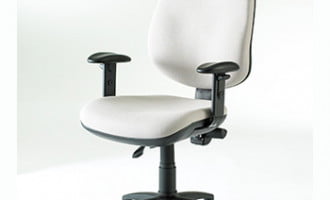
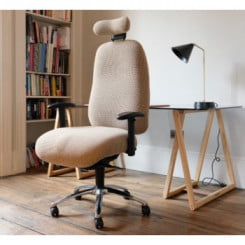
Bariatric and heavy-duty office chairs are becoming essential considerations for workplaces wanting to provide safe, comfortable seating for plus-sized staff. These chairs are designed with wider seat pads and backrests. They are rigorously tested to support higher weight capacities, ensuring both durability and comfort.
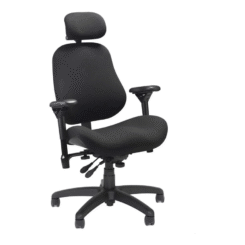
The BodyBilt Big & Tall range is an excellent solution for plus-sized staff who need extra space and support. The J2504 model, for example, features a reinforced seat structure that is 22% larger than standard. This means it is accommodating employees above the 80th percentile in height and weight. It’s also rated to hold up to 500 lbs (around 35 stone), making it ideal for long-term use.
Another strong choice is the Adapt 700 SE chair, with a weight capacity of 40 stone (250kg) and multiple customisation options for headrests and armrests. It offers a more budget-friendly alternative to the BodyBilt range, without compromising on support.
The Vela Tango 300 and 310 are further options of bariatric chairs that have a higher weight capacity. The Vela 300 has a user weight of 31 stone (300kg), and the 310 has a weight capacity of 47 stone (300kg). These chairs allow people to stay mobilised, as the user can push/walk around seated, as these chairs are wheeled. They can be customised to have features such as brakes and electric lifts.



At Posture People, we often help employers navigate this sensitive topic by asking the difficult questions on their behalf. This approach removes the need for managers to have potentially uncomfortable conversations about an employee’s weight, while still ensuring that plus-sized staff receive the correct furniture and equipment for their workstation. By handling these discussions professionally and discreetly, we make it easier for facilities managers to create a supportive and inclusive workplace without risking embarrassment or awkwardness for anyone involved.
Regular DSE assessments may highlight the need for specific provision, or an employee may request a change in the work environment or equipment themselves. A DSE assessment for an entire team or division using our ready-prepared form may remove the need for anyone to feel singled out.
Prior to coming on-site or making recommendations for suitable products, we always send out a pre-assessment form that asks for information such as height and weight. Knowing the individual’s weight is vital, as many office chairs only guarantee to support a weight of around 18 stone. The completed form is then sent directly to us, saving you from a potentially awkward conversation about an individual’s weight.